Strategies for Success
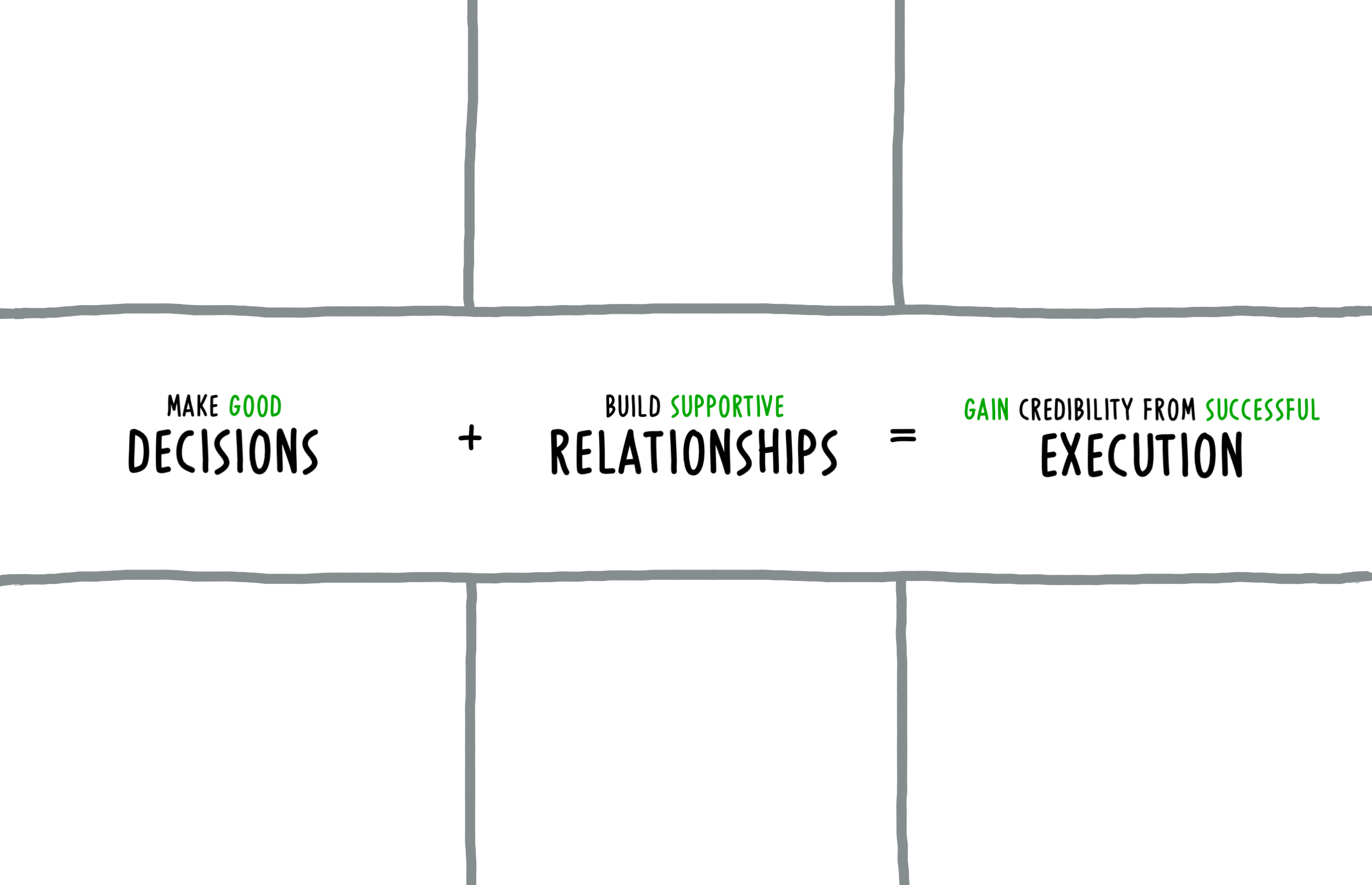
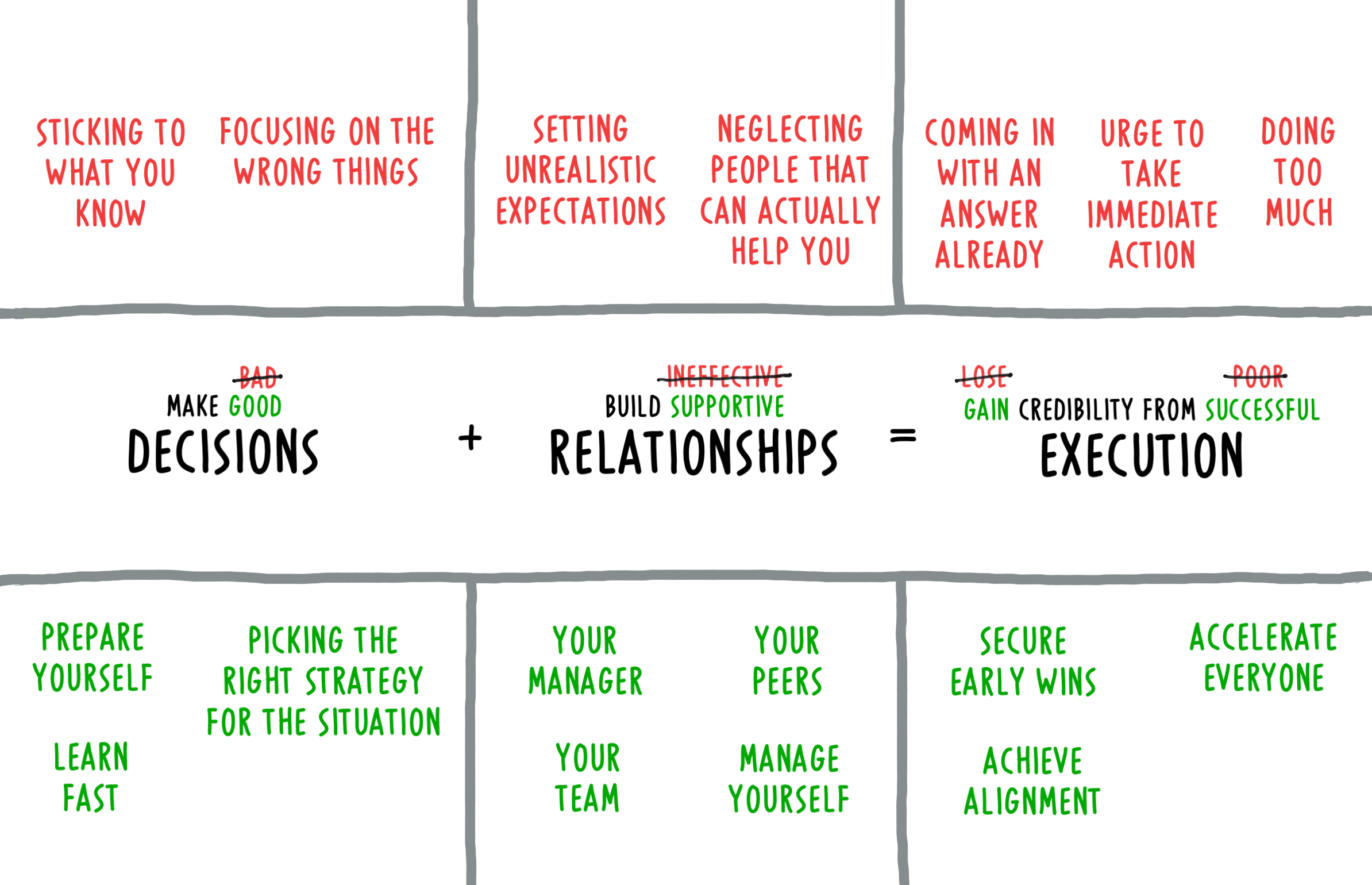
Successful people have three things going for them. They make good decisions, surround themselves with a good team of people and they execute, execute, execute.
The key question is: how do we get all three right, all the time?
- Can we be certain all the decisions we’ve made are good?
- Can we work together for an extended period of time towards a common goal?
- How do we know if our strategy will pay off at the end?
It’s all about perspective
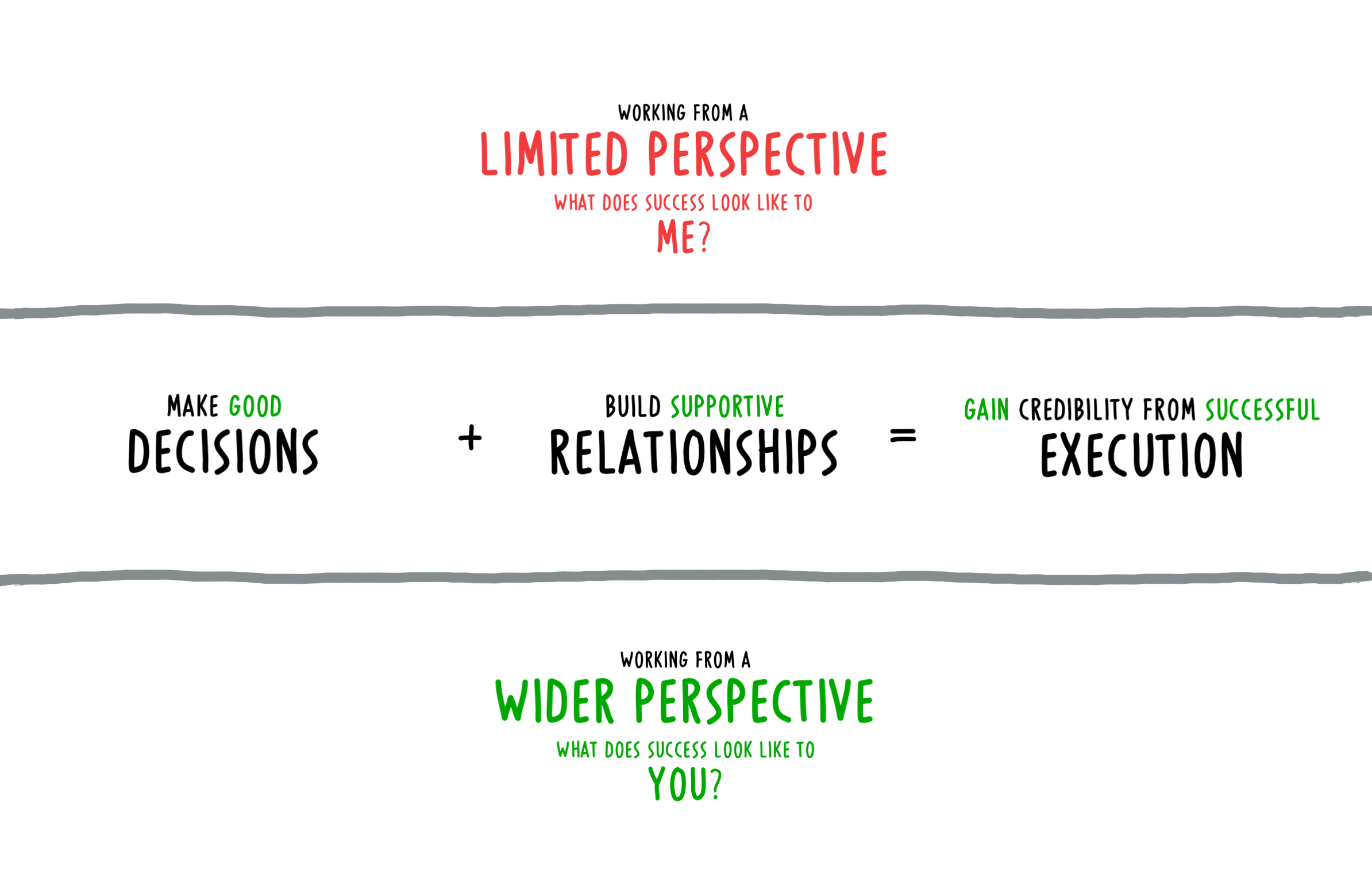
Perspective is how people view the world through their own eyes.
Our perspective affects the way we make decisions and the way we work with others.
You have your own perspective of how the world works. Others have their own perspective, uniquely different from yours.
Working from a narrow perspective gets you in trouble
When we consider only a small number of viewpoints, we view problems and solutions from a narrow perspective. Perhaps it’s just one viewpoint — yours.
Working from a narrow perspectives can lead to tunnel vision where we fail to see the bigger picture.
A wider perspective helps you think outside the box
When we take on a wider perspective, we consider other people’s viewpoints as well. This requires more effort, but is key to getting our job done successfully.
Why we make bad decisions
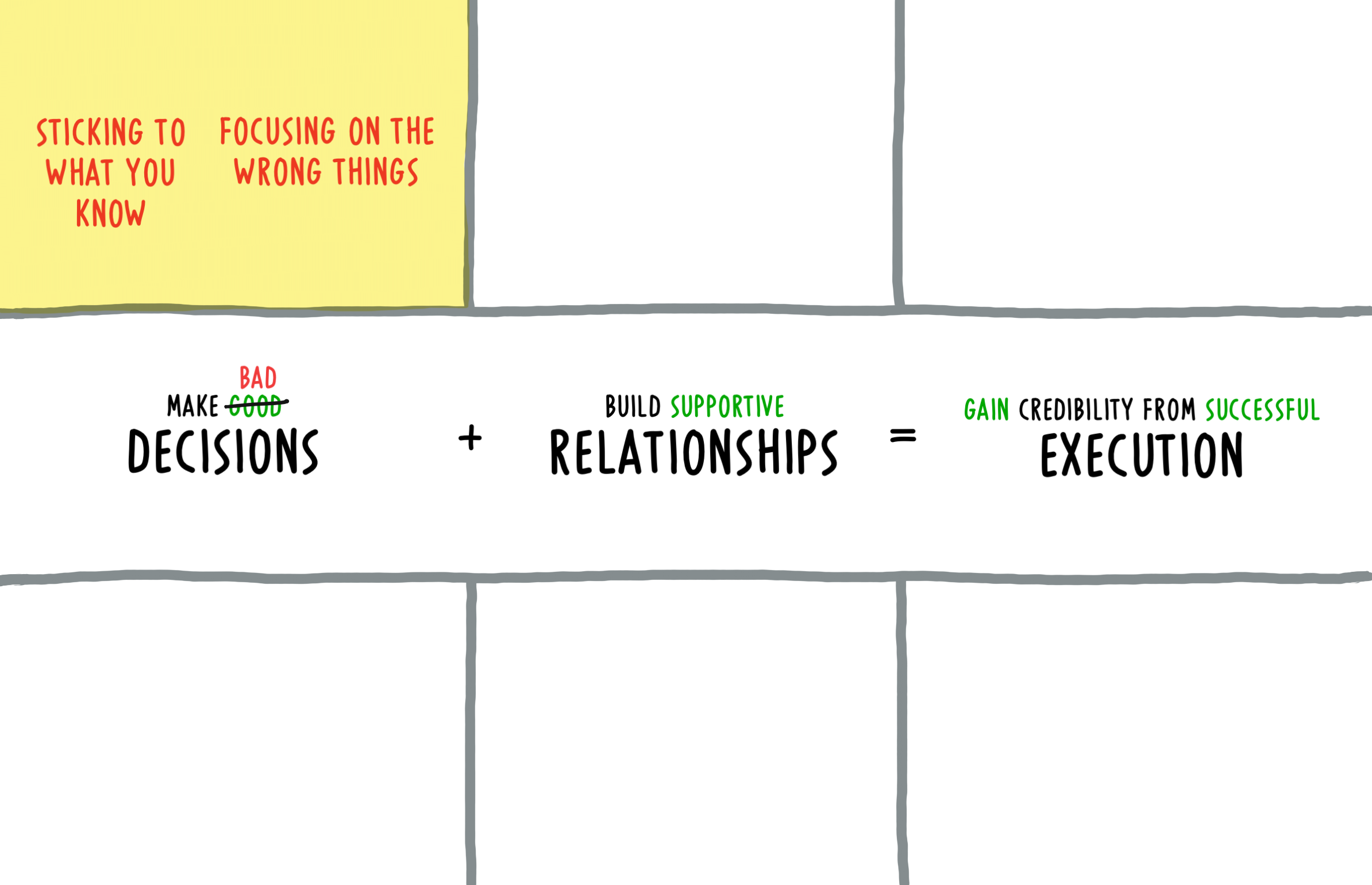
Sticking to what you know
It feels comfortable and safe when we use our existing skills and experience to get our job done efficiently.
It’s a formula that has made us successful in the past, so why not replicate it for the new role or project?
Focusing on the wrong things
Sticking to what we know does not guarantee future success. We may be ignoring or avoiding more important and urgent problems.
We close off opportunities to learn new skills and competencies.
We become unprepared to overcome newer, more complex challenges.
When relationships fail at work
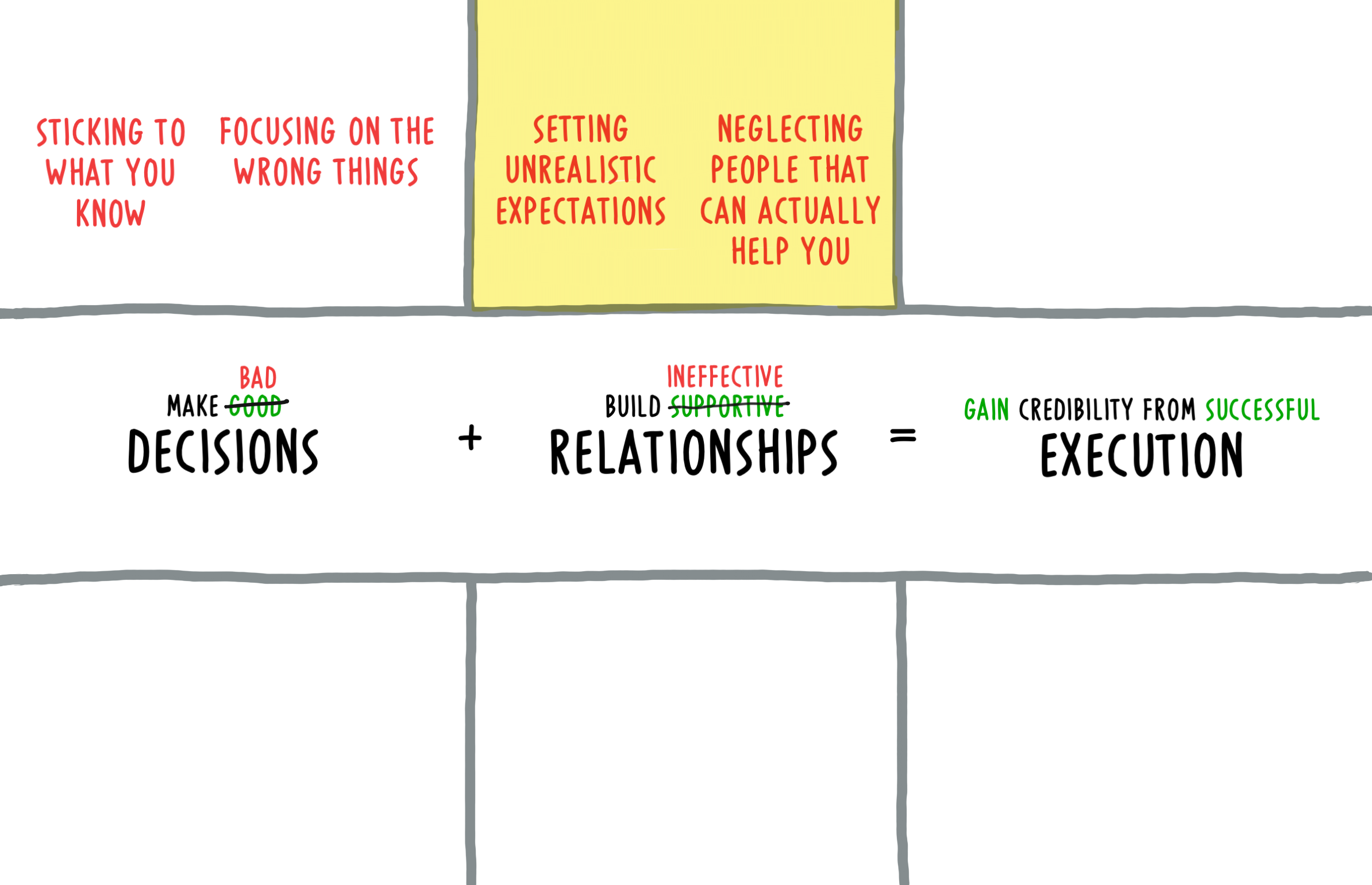
Unrealistic Expectations
When we work in a team without a shared perspective, everyone’s goals, objectives and purpose can be very different.
Teams that don’t work together to accept or adopt a shared perspective will inevitably experience frustration when expectations aren’t met.
Reluctance to seek help
We avoid asking for help because we fear others may perceive that we lack competence to complete a given task.
However, this can lead to painful conversations or worse, damaged credibility when expectations aren’t met.
- Managers don’t like surprises, especially late in the game.
- Your direct reports will get demotivated when expectations aren’t clearly communicated.
- We often forget asking help from peers. They may have useful insight and advice, especially if they’ve already successfully navigated through similar challenges.
Setting up for failure
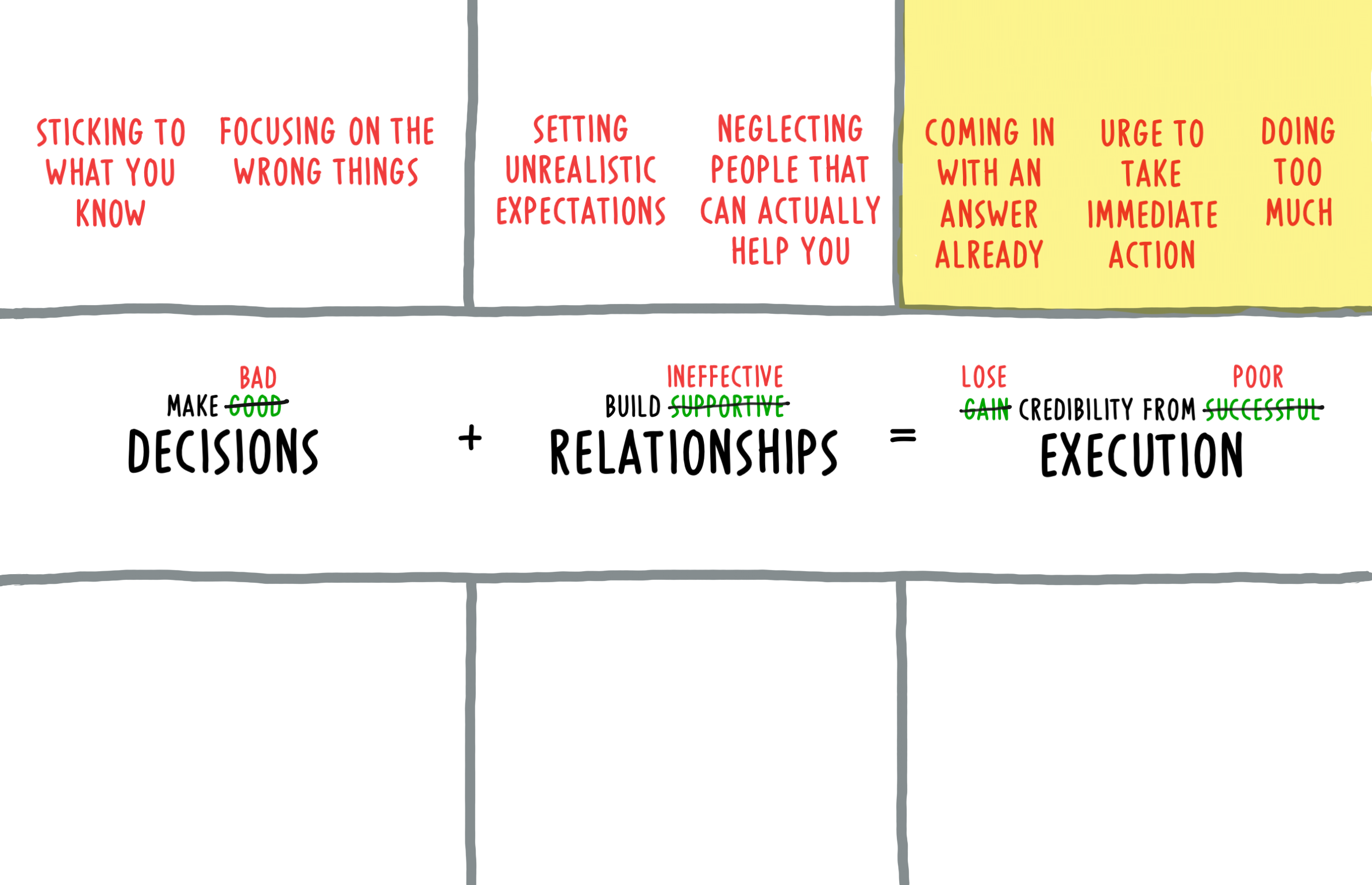
Urge to take immediate action
We are often too eager to impress others early on, so much so that we focus on delivering results immediately.
This can backfire if the urge to take action means being inflexible to other possibly better solutions.
Doing too much
We can up doing too much if we lack a clear plan of attack, or if we’re too ambitious.
We lose focus as we spread ourselves too thin on too many initiatives and can end up delivering sub-par results.
Making good decisions
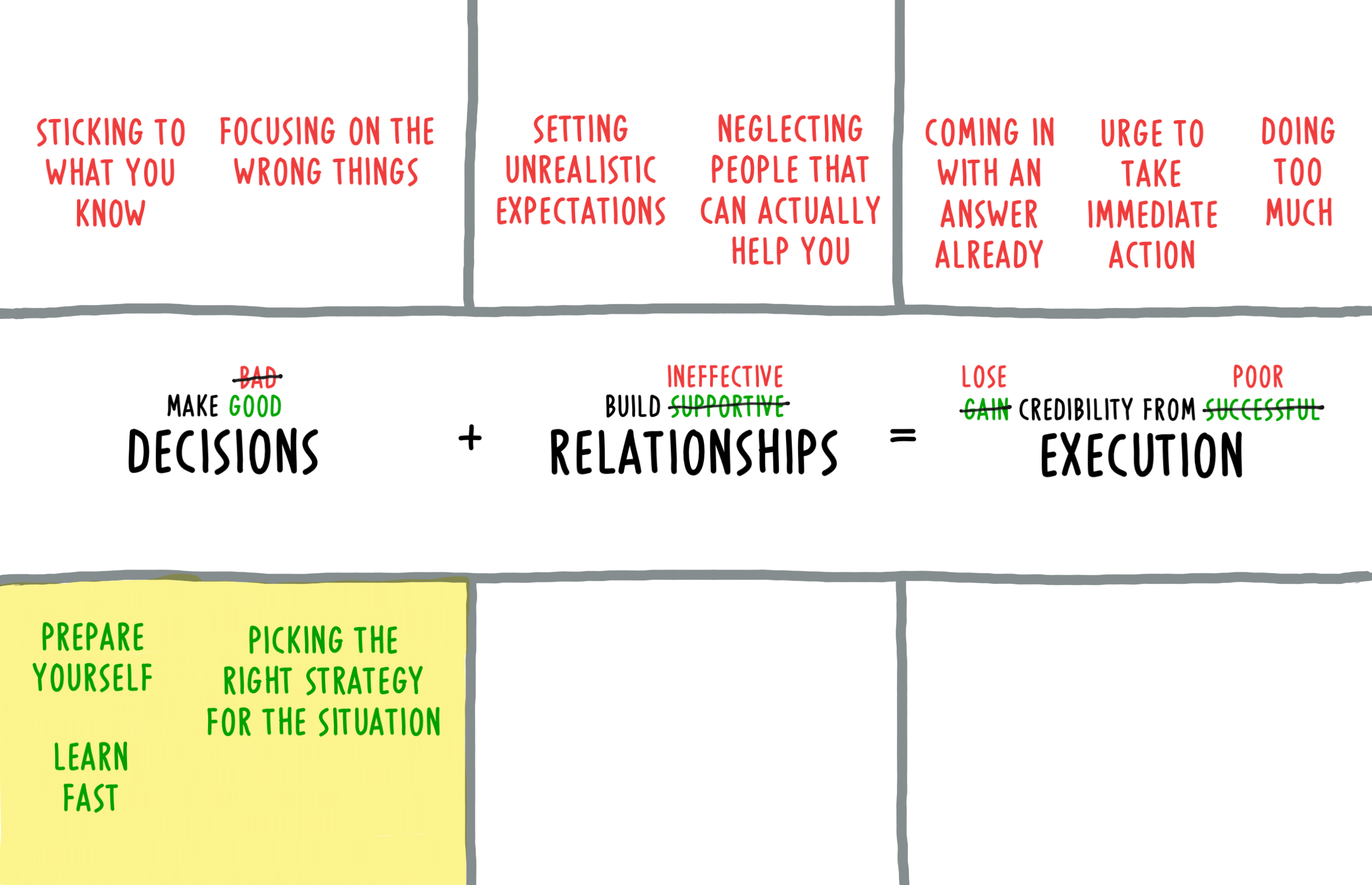
- Prepare Yourself
- Learn fast
- Picking the right strategy for the situation
Building supportive relationships
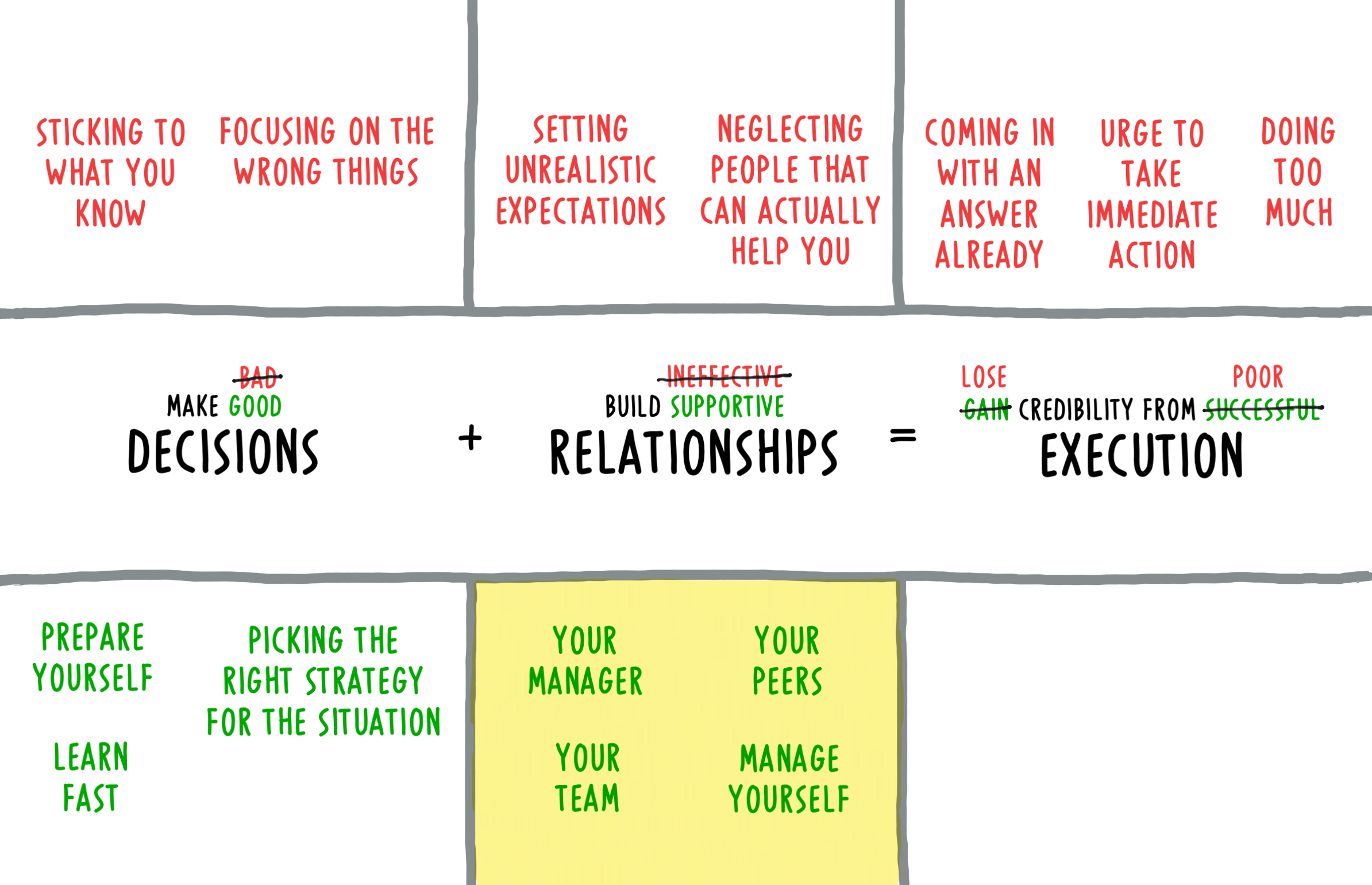
- With your manager → Manage expectations
- With your team → Build their capabilities
- With your peers → Influence
- Manage Yourself
Successful Execution
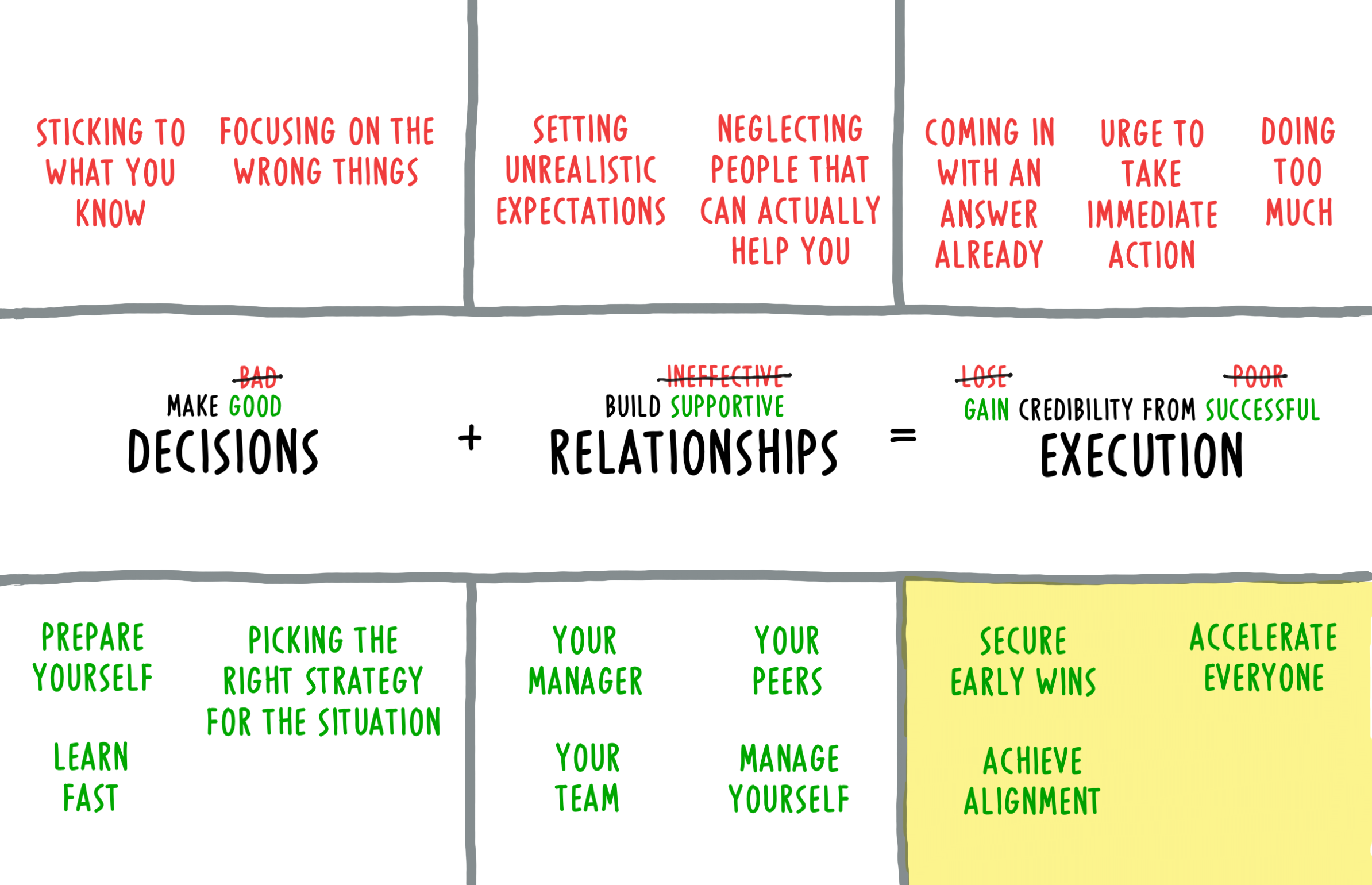
- Secure early wins
- Align everyone
- Accelerate everyone
What’s next
Dive deeper into specific areas Too much to contain into one article
Reference
- https://hbr.org/2008/06/the-secrets-to-successful-strategy-execution
- https://hbr.org/2017/01/execution-is-a-people-problem-not-a-strategy-problem
- First 90 Days, by Michael D. Watkins