How to Gain Credibility at Work
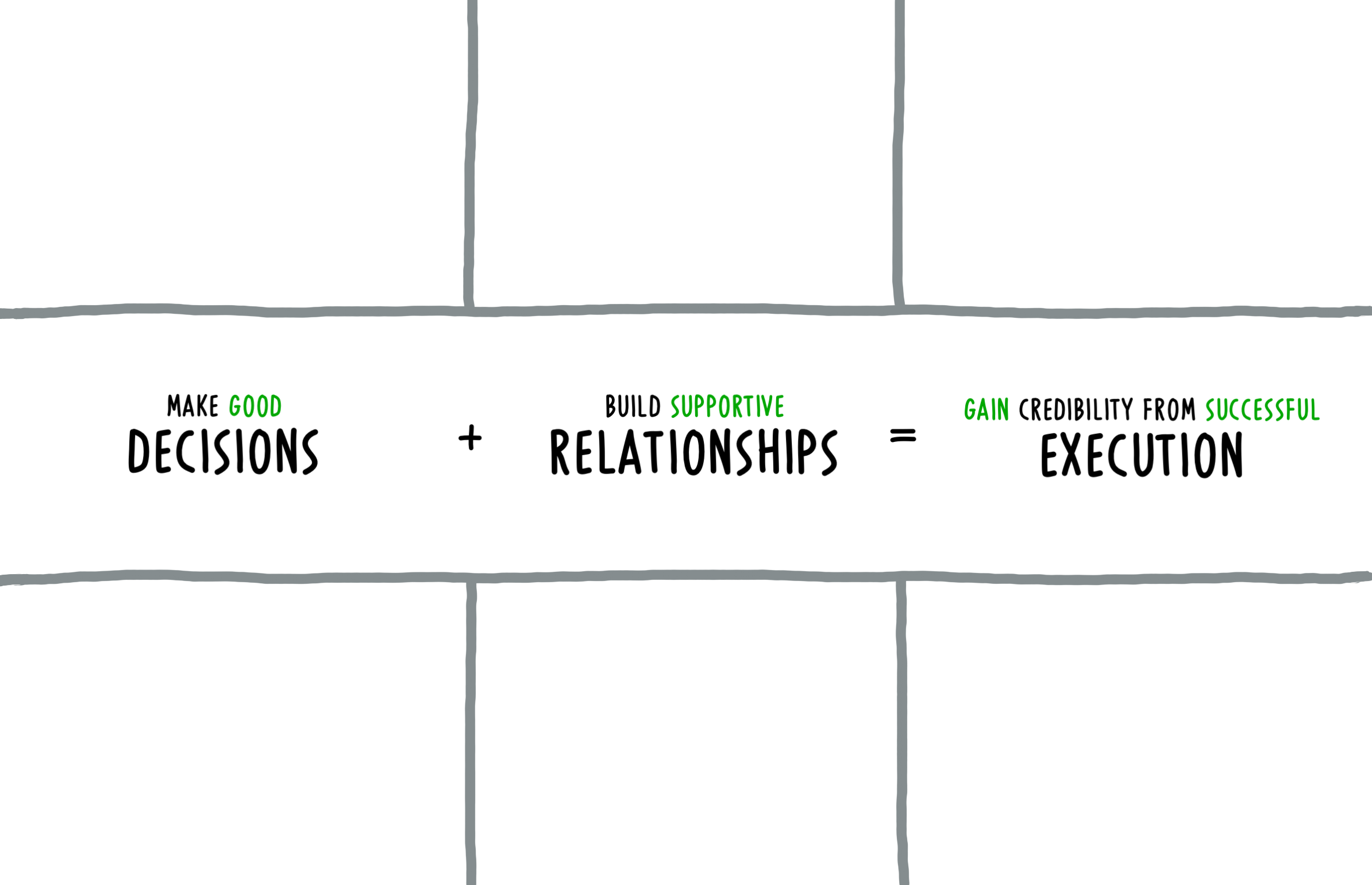
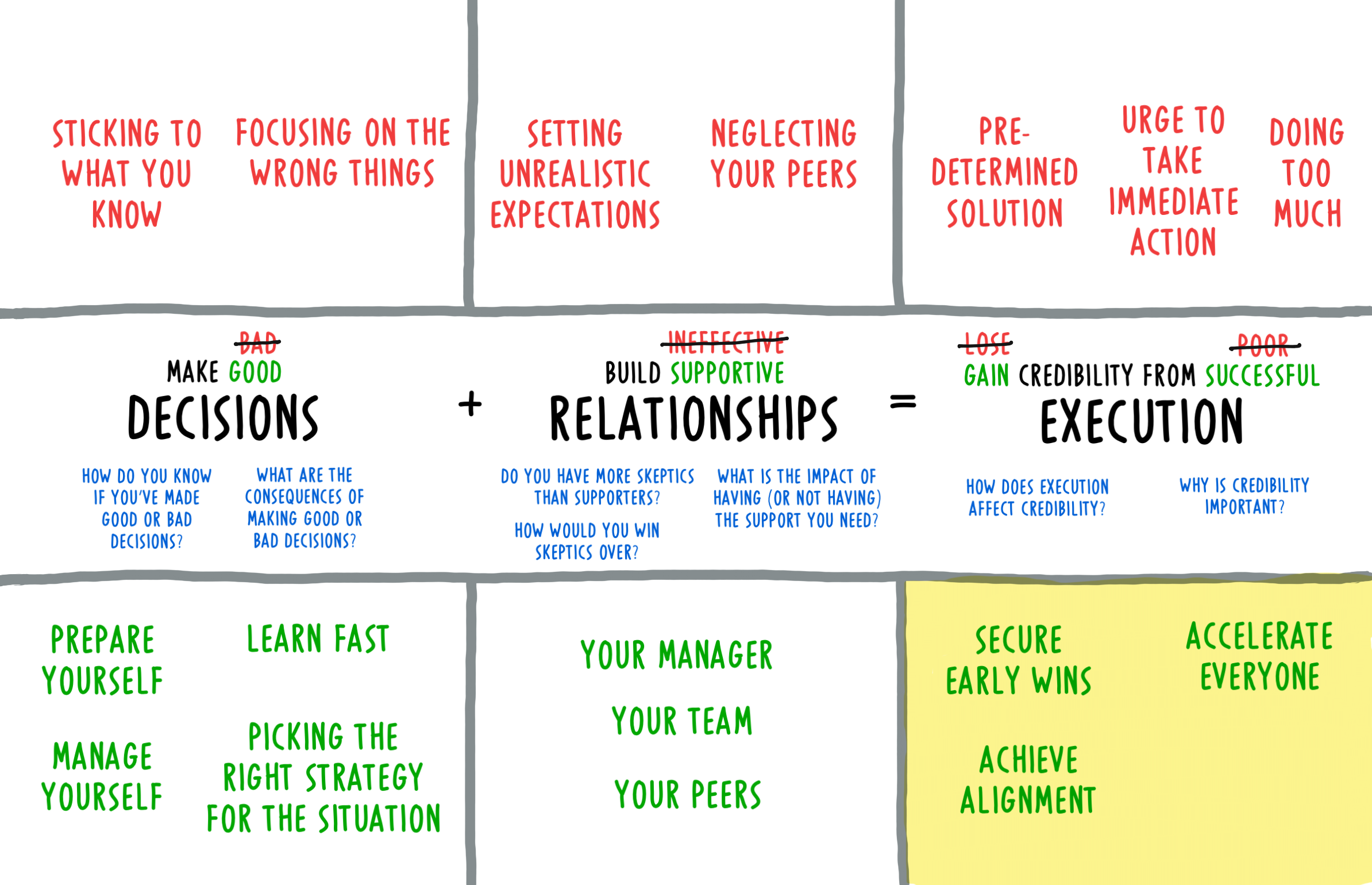
Making good decisions consistently and building supportive relationships with the people we work with improves our ability to execute successfully.
Do this often and we gain the trust of our peers and build our credibility.
(And how to lose it)
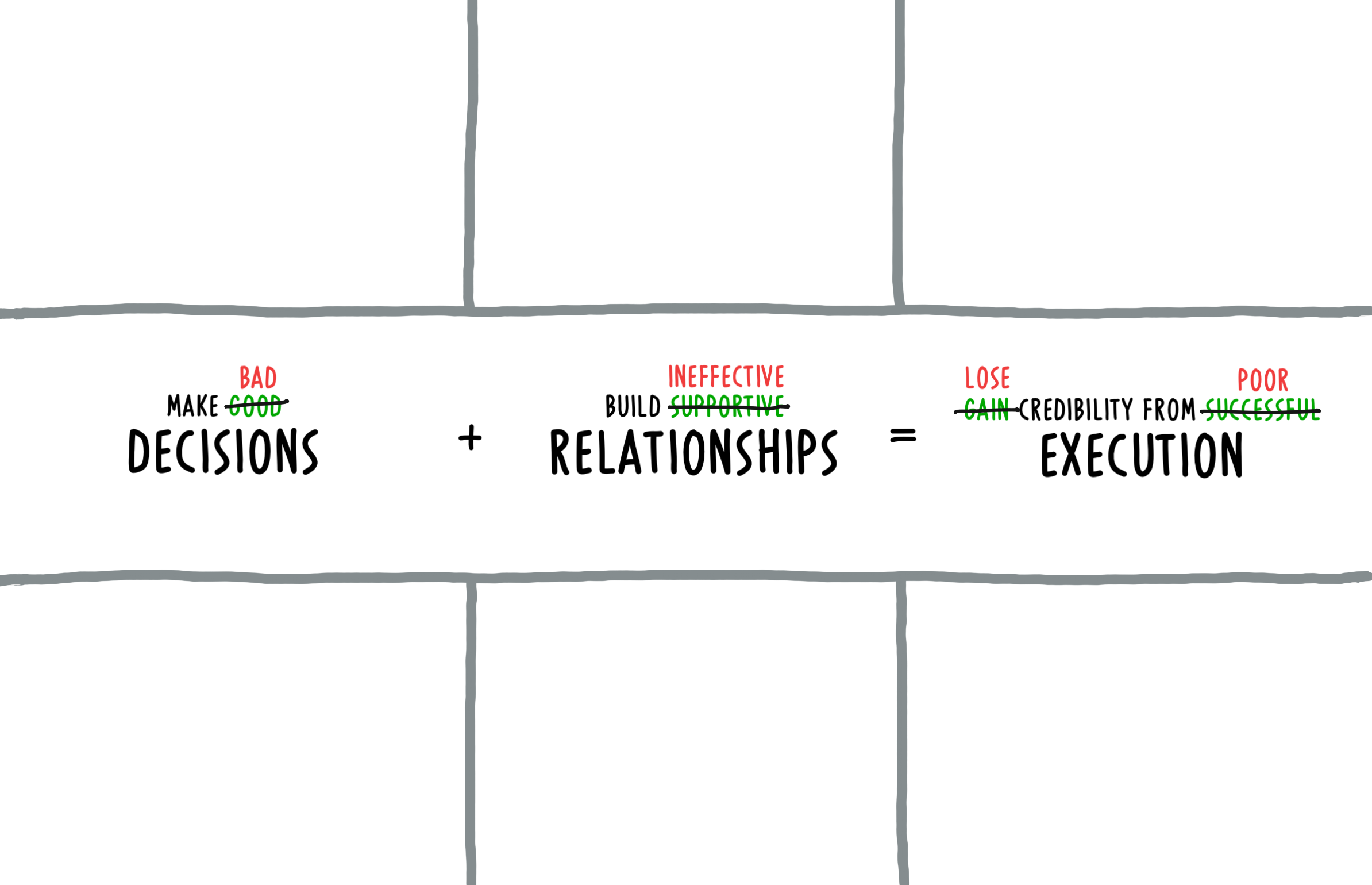
Conversely, making bad decisions consistently can lead to ineffective relationships that deteriorate over time. Our ability to perform is impacted. We execute poorly and get undesirable results.
Do this often and we lose credibility and it becomes harder to influence others in the future.
Before we begin
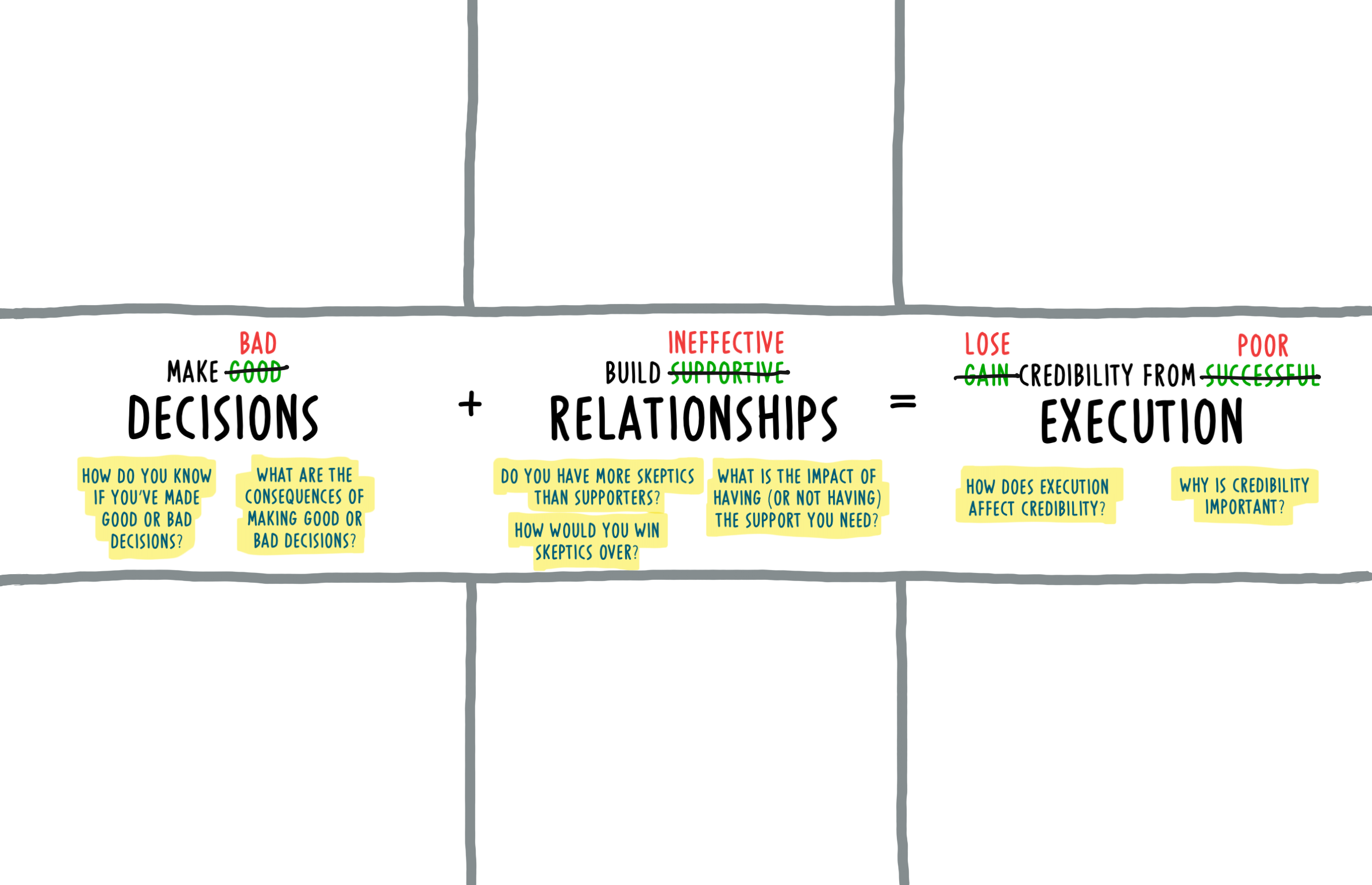
Keep in mind these questions as we try to understand what it takes to execute successfully.
On decision making:
- How do we know if the decisions we make are good, or bad?
- What are the consequences of making good (or bad decisions)?
On building relationships:
- Do we currently have more skeptics or supporters?
- How would we win skeptics over?
- What is the impact of having (or not having) the support you need?
On execution:
- How does execution affect credibility?
- Why is credibility important?
Let’s try to break this down.
How we end up making bad decisions
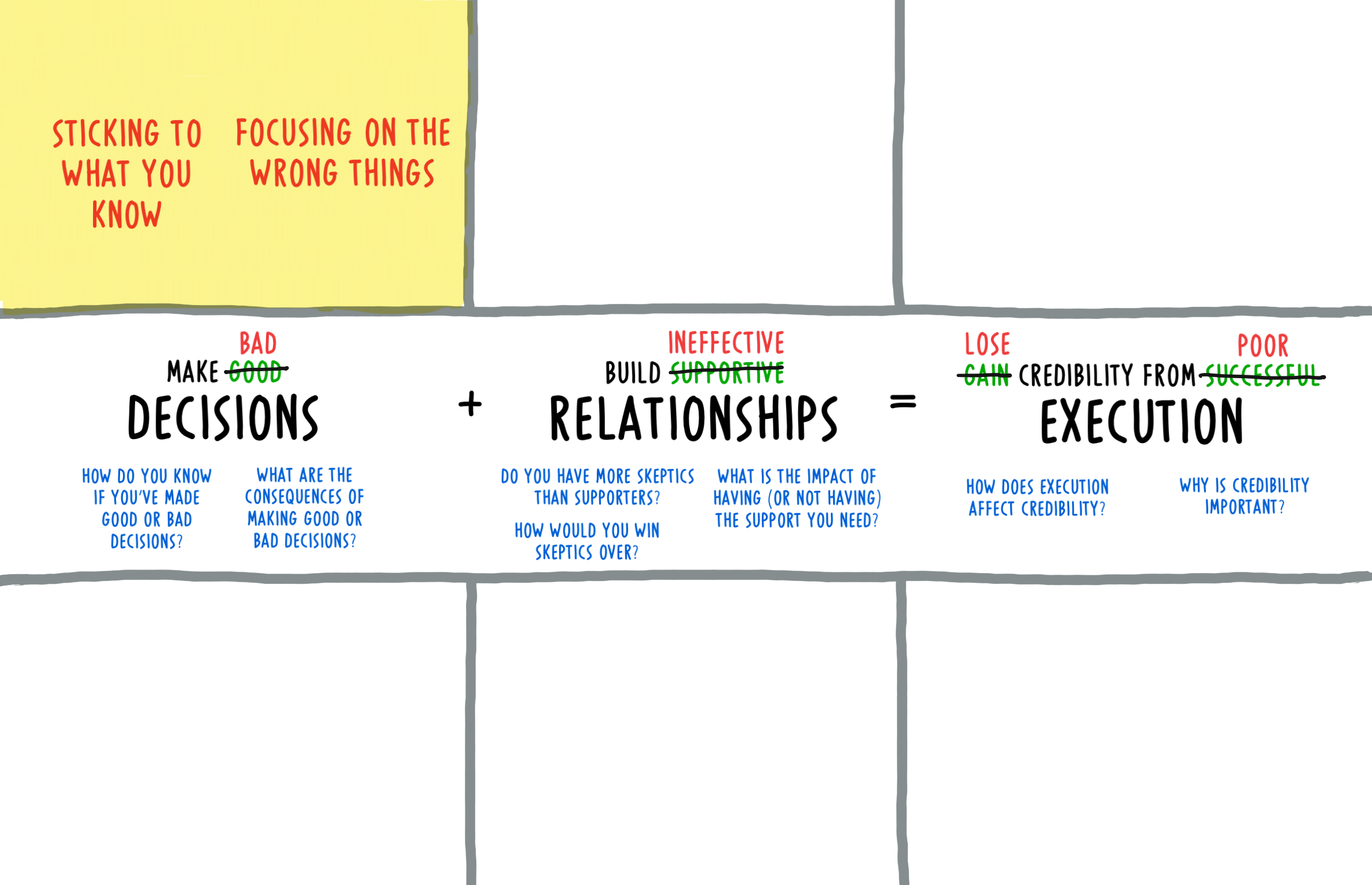
We become prone to making bad decisions when we fall into these common traps.
Sticking to what we know
It’s easy to stick to what we know because:
- It’s a comfortable, safe space where we can apply our skills and knowledge we’ve gained through experience to get the job done effectively.
- It’s a formula that has made us successful in the past, so why not replicate it in the new role or project?
Focusing on the wrong things
When we make it a habit to stick to what we know, we view problems from a narrow perspective. This causes us to focus on the wrong things because:
- We close off opportunities to develop new skills and competencies
- Or what we focus on may not be relevant for the challenges we are encountering right now.
For example
Let’s say you’re an excellent chef who can make amazing dishes. You decide to open your restaurant to make a name for yourself.
While your culinary skills have made you successful, owning and running a restaurant requires vastly different skills.
Your instinct is to play to your own strengths and focus on producing amazing dishes. Perhaps the more relevant question is: how do you get customers onto your restaurant tables?
This would require marketing skills, more so than culinary skills.
If the goal is to bring customers to your new restaurant, focusing on your culinary skills alone may not be enough.
So how do we make good decisions?
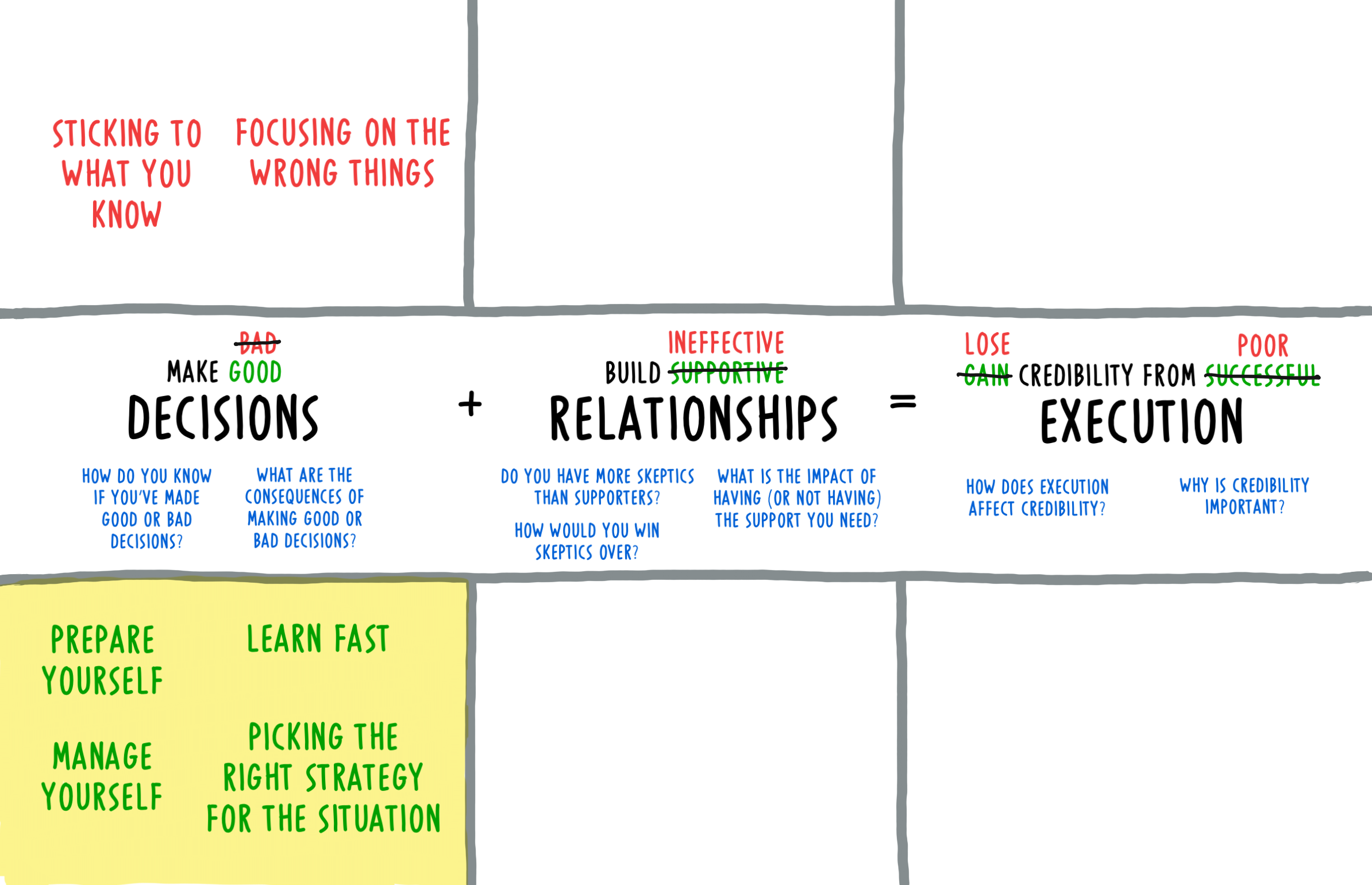
The key to making good decisions consistently is to know how to pick the right strategy for a given situation we’re in.
For example
World-class athletes are great character studies on making good decisions.
They have a remarkable ability to pick the right strategy (often in milliseconds) consistently to win games in high-pressure situations even when they’re exhausted.
For an athlete, winning a finals is a culmination of thousands, if not millions of good decisions that have been made along the way, sometimes years in advance.
Three Step Playbook
Practice making good decisions consistently the same way athletes do. Here’s how:
-
Prepare yourself - Assess the situation you’re in, make sure you’re mentally focused on the upcoming challenges you’re about to face.
-
Manage yourself - Keep yourself in check, so that you don’t lose perspective of the end goal. Understand your own strengths and weaknesses and exploit them to your benefit before others exploit it for theirs.
-
Learn (and learn fast) - You may need to learn fast and on-the-job, so you’ll need to be systematic at what you need to learn, and how to learn it most efficiently.
When relationships fail at work
Decisions often have consequences, one of which is its impact on others, particularly the people we work with.
Bad decisions can ruin work relationships and we tend to fall into these common traps.
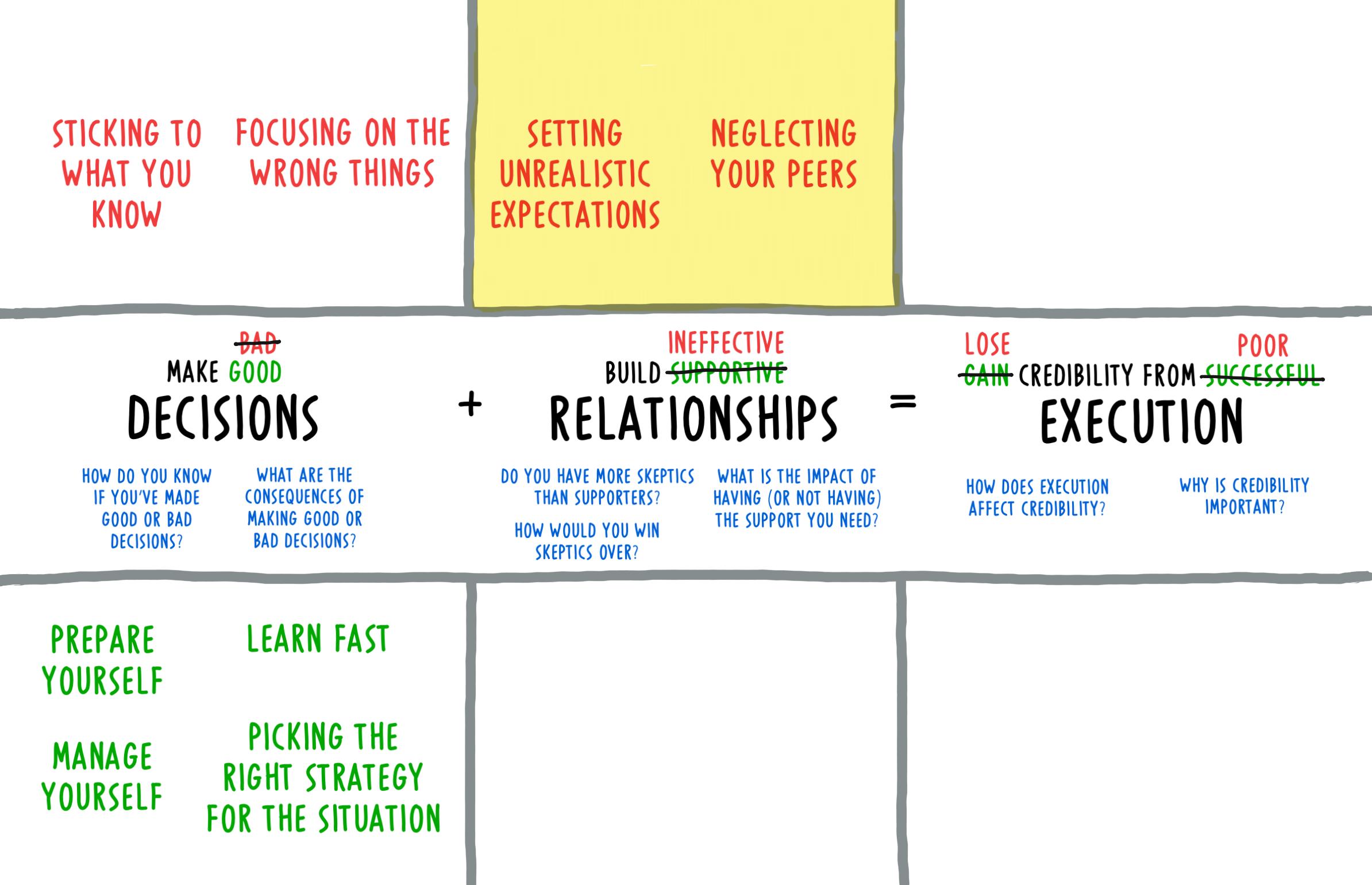
Setting unrealistic expectations
When we fail to establish clear, achievable objectives early on with one another, we set ourselves up for frustration when expectations aren’t met.
For example, you may have worked hard and performed well, but still failed to meet your manager’s expectation because her goals and objectives may have been very different from yours.
Neglecting peers (and other stakeholders)
We are often too focused on building good working relationships with our manager and neglect the relationships with our peers and other key stakeholders.
This can lead to silo mentality, where we make decisions from a limited perspective and fail to learn from peers who maybe facing similar challenges.
How and who do we build productive relationships with?
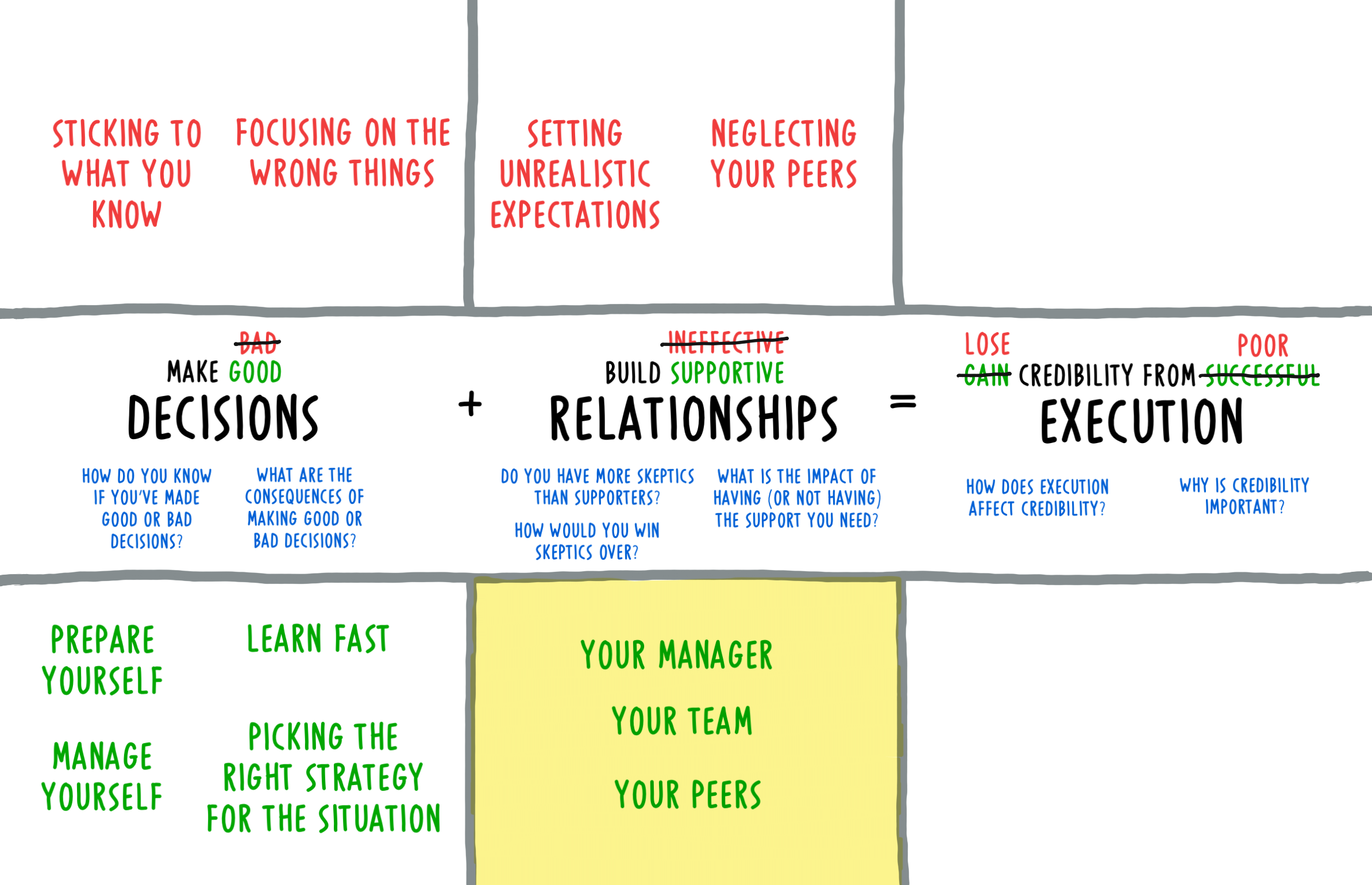
Building and maintaining trust with one another is key to any productive relationships.
Setting and meeting realistic expectations consistently plays a big role in building trust.
Your manager
Manage expectations with your manager through frequent conversations (i.e. if expectations are realistic and purposeful, if they’re misunderstood or being met).
Your team
If you have a team to manage, the tables are turned so to speak, and you could be setting expectations instead.
You’ll have to build and maintain a team that has the ability and capability to deliver results that meet realistic expectations.
Your peers
With peers and other stakeholders, influence plays a crucial role when their support affects the outcome of your work.
Setting yourself up for poor execution
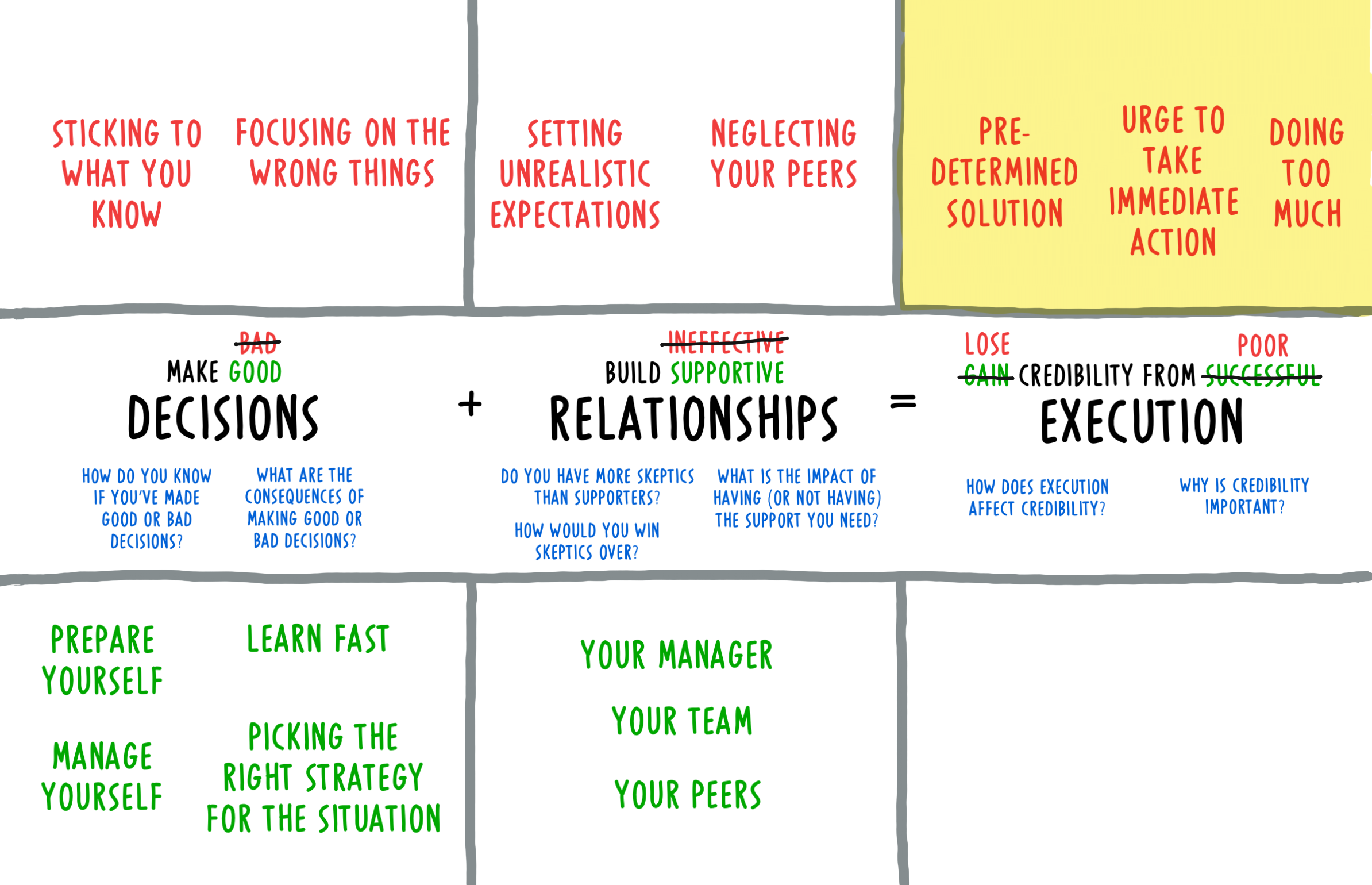
Perhaps you are eager to change things up in your new role.
You’ve come in with a pre-determined solution already in mind to fix a problem you’ve identified early on.
There is a strong urge to take immediate action but these early decisions can backfire if you have not spent adequate time fully understanding the situation you’re in.
You can end up doing too much if you’re trying to solve too many problems early on without first identifying and prioritising high-value problems to tackle first.
Successful execution
Ultimately, the aim is to execute successfully so that we can achieve the goals we’ve set and build our credibility one successful execution at a time.
The quality of the decisions we make and the strength of our relationships with others goes a long way in working towards a more successful outcome.
Secure early wins to create momentum and build credibility early on.
As your credibility grows with each successful outcome, you will need to organize and align teams towards a clear strategic vision.
Finally grow and develop everyone to make good decisions and build relationships with each other so that they too can execute successfully.
What’s next
On decision making
On building relationships
On execution